
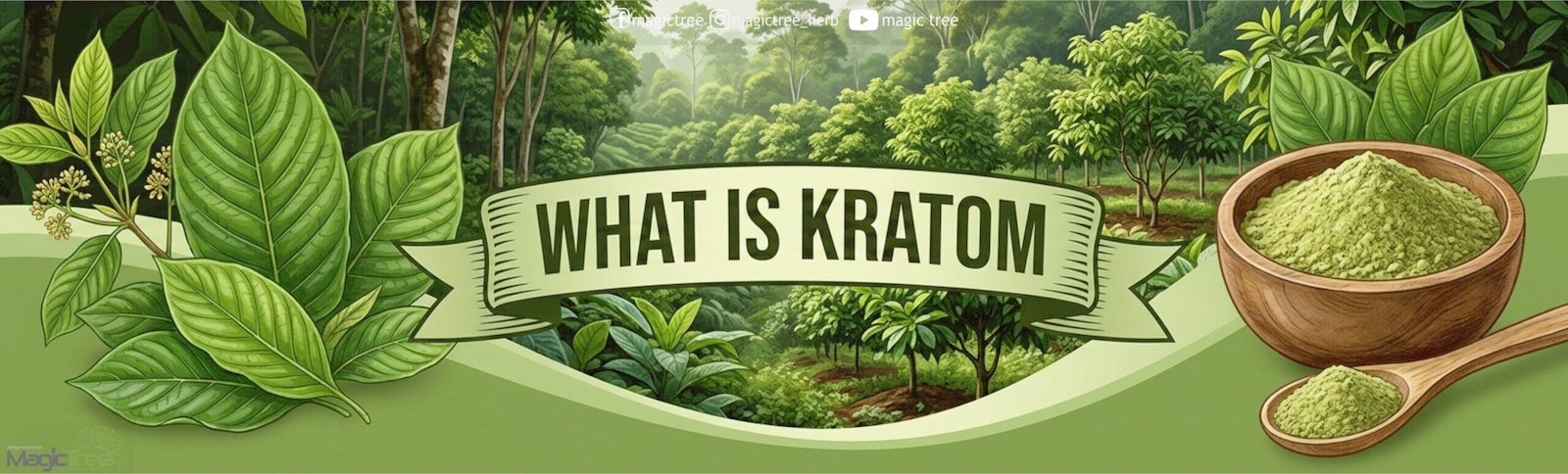
What is Kratom?
Kratom is a tropical tree native to Southeast Asia, particularly Indonesia, Thailand, and Malaysia. Its leaves have been used for centuries in traditional medicine, often chewed or brewed into tea to relieve fatigue, pain, or to enhance productivity. In recent years, kratom has attracted global attention as both a natural remedy and a controversial substance. Supporters highlight its potential benefits for pain management, mood enhancement, and energy, while critics warn of possible health risks and misuse. As kratom enters Western markets, debates about its legality, safety, and medical value continue to grow. This article provides a clear overview of what kratom is, its background, uses, challenges, and the ongoing discussions surrounding its role in modern society.
History Kratom (Ketum)
The history of kratom dates back hundreds of years in Southeast Asia, where it has been deeply integrated into cultural and medicinal practices. Farmers in Thailand traditionally chewed kratom leaves to combat exhaustion during long hours of labor, while communities in Malaysia and Indonesia brewed kratom tea to relieve pain or as part of social rituals. Its dual effects—stimulating in small doses and sedative in larger amounts—made it a versatile plant in traditional medicine.
In the early 2000s, kratom began to gain popularity outside Asia, marketed in Western countries as a herbal supplement. It was promoted as a natural alternative for managing chronic pain, anxiety, and even opioid withdrawal. However, this rise in popularity also triggered regulatory scrutiny. Some governments banned kratom due to concerns about addiction and health risks, while others allowed its sale under strict guidelines. Scientific research has expanded, but findings remain mixed, fueling ongoing debates. Understanding this cultural and historical background is essential to grasp why kratom remains a complex and controversial subject today.
Definition and Composition
Kratom (Mitragyna speciosa) belongs to the coffee family. Its leaves contain active alkaloids, primarily mitragynine and 7-hydroxymitragynine, which interact with opioid receptors in the brain. These compounds are responsible for kratom’s dual effects: stimulation at low doses and sedation at higher doses. Unlike traditional opioids, kratom’s effects are milder, but its pharmacological profile has raised concerns about dependency.
Uses and Benefits
Traditionally, kratom was used to relieve fatigue, enhance productivity, and manage pain. In modern contexts, users claim benefits such as:
- Pain relief: Kratom is often used by individuals with chronic pain conditions.
- Energy and focus: At low doses, kratom can act as a stimulant, improving alertness.
- Mood enhancement: Some users report reduced anxiety and improved mood.
- Opioid withdrawal support: Anecdotal evidence suggests kratom may ease withdrawal symptoms, though scientific validation is limited.
Risks and Side Effects
Despite its potential benefits, kratom carries risks. Reported side effects include nausea, constipation, dizziness, and in some cases, dependency. Long-term or high-dose use may lead to tolerance and withdrawal symptoms similar to opioids. There are also concerns about contamination in unregulated kratom products, which can pose additional health risks.
Legality and Regulation
Kratom’s legal status varies worldwide. In Thailand, kratom was banned for decades but recently legalized under certain conditions. Malaysia and several other Southeast Asian countries still prohibit its use. In the United States, kratom is legal in most states but banned in a few. The Food and Drug Administration (FDA) has raised concerns, while the Drug Enforcement Administration (DEA) has considered stricter regulation. This patchwork of laws reflects the ongoing uncertainty about kratom’s safety and medical value.
Scientific Research
Research on kratom is growing but remains inconclusive. Some studies highlight its potential as a pain reliever and harm-reduction tool for opioid users. Others emphasize risks of dependency and adverse health effects. The lack of large-scale clinical trials makes it difficult to establish definitive conclusions. As a result, kratom remains in a gray area between traditional medicine and modern pharmacology.
Counterarguments / Challenges
Critics argue that kratom’s benefits are often overstated and not supported by sufficient scientific evidence. They warn that its active compounds can lead to dependency, especially when consumed in high doses or without regulation. Public health officials also highlight the risks of contamination in unregulated kratom products, which may contain harmful additives. Furthermore, the inconsistent legal status across countries creates confusion for consumers and complicates research efforts. While advocates see kratom as a natural alternative to opioids, skeptics caution that without proper regulation and scientific validation, its widespread use could pose significant health challenges.
Conclusion
Kratom is a plant with a long history in Southeast Asia and a growing presence in global markets. Its unique properties—stimulating at low doses and sedative at higher doses—make it both promising and controversial. While many users report benefits such as pain relief and mood enhancement, risks of dependency and health complications cannot be ignored. The ongoing debates about legality and safety highlight the need for more rigorous scientific research and thoughtful regulation. Ultimately, kratom represents both opportunity and challenge: a traditional remedy with potential modern applications, but one that requires careful consideration to ensure its safe and responsible use.
2 Trackbacks
5 Benefits of Kratom - Magic Tree Kratom
March 4, 2026 at 12:09 pm[…] cultural significance of kratom in Southeast Asia is deeply rooted in daily life. Farmers in Thailand and Malaysia traditionally […]
Kratom vs Opioids: Is it a Safe Alternative for Chronic Pain Management? - Magic Tree Kratom
March 5, 2026 at 10:08 am[…] scientifically known as Mitragyna speciosa, is a tropical plant native to Southeast Asia, particularly Indonesia, Thailand, and Malaysia. For […]