
For collectors and enthusiasts of botanical products, maintaining the biological integrity of your collection is a top priority. Whether you are a small-scale hobbyist or a large-scale distributor, understanding the chemistry behind botanical degradation is essential. When it comes to Mitragyna speciosa, the goal is simple: preserving the delicate alkaloid profile that defines the plant’s quality.
Freshness is not just about color or aroma; it is about molecular stability. Over time, environmental factors can trigger chemical reactions that convert primary alkaloids into secondary metabolites, potentially altering the botanical’s properties. This guide explores the scientific principles of storage to help you ensure a maximum shelf life for your botanicals.
The Enemies of Alkaloids: Why Degradation Happens
To store your botanical products effectively, you must first understand the four primary “enemies” of organic stability: Light, Heat, Moisture, and Oxygen.
1. Ultraviolet (UV) Light and Photo-oxidation
Light is perhaps the most aggressive catalyst for chemical change. UV rays provide the energy necessary for photo-oxidation. In the context of Kratom chemistry, prolonged exposure to sunlight can cause mitragynine to degrade. This is why leaves in the wild change properties when exposed to different drying techniques—the same principle applies to your stored powder or crushed leaf.
2. Thermal Energy (Heat)
Chemical reactions generally accelerate as temperature increases. High heat can cause the organic compounds to break down or lose their potency. Storing your collection near a stove, a heater, or in a car during a hot day in a tropical climate like Kalimantan can significantly shorten its lifespan.
3. Moisture and Microbial Growth
As a raw botanical product, powdered leaves are highly hygroscopic—they absorb moisture from the air. If the moisture content rises above a certain threshold, it creates a breeding ground for mold and bacteria. Ensuring a bone-dry environment is the only way to prevent microbial spoilage.
4. Oxidation
Oxygen is a highly reactive gas. When organic matter is exposed to air, oxidation occurs. This is the same process that turns an apple brown. In botanicals, oxidation can lead to the loss of the vibrant green color and the gradual breakdown of the indole alkaloids.
Professional Storage Strategies for Maximum Shelf Life
If you want to maintain your botanical collection for months or even years, you need a systematic approach to storage. Here are the professional standards for preserving Mitragyna alkaloids:
Choose the Right Container
The material of your container is your first line of defense.
- Glass Jars: Airtight glass jars (especially amber or cobalt glass) are excellent because they do not leach chemicals and provide a complete seal against oxygen.
- Mylar Bags: For long-term storage or shipping, vacuum-sealed Mylar bags are the gold standard. They are light-proof, moisture-proof, and can be oxygen-depleted.
- Avoid Low-Grade Plastics: Some cheap plastics are porous and can allow odors or moisture to seep in over time.
Control the Climate
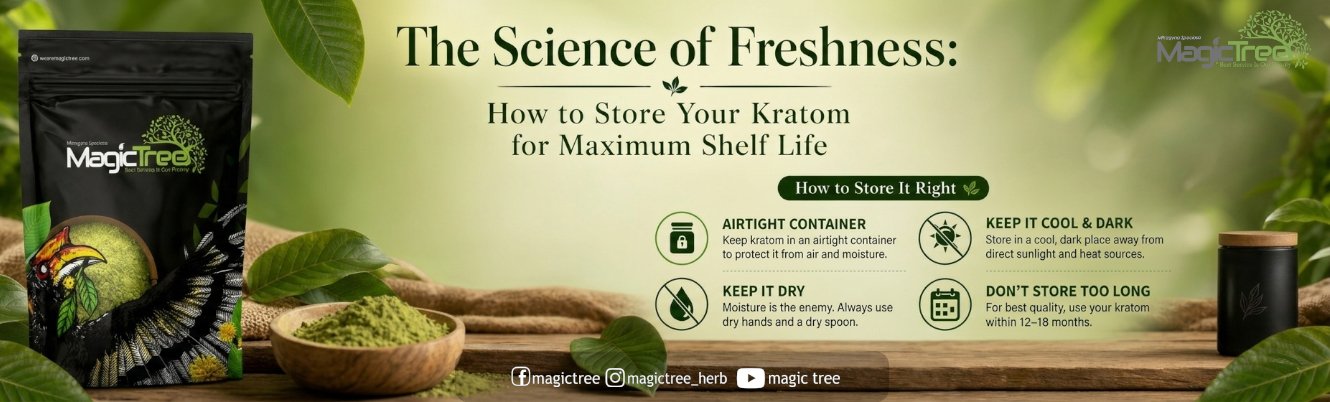
The “Cool, Dark, and Dry” rule is the cornerstone of botanical preservation.
- Temperature: Aim for a consistent temperature between 15°C and 22°C. Avoid fluctuations, as shifting temperatures can cause condensation inside the container.
- Darkness: Store containers in a pantry, a drawer, or a dedicated storage bin. If using clear glass, keep it inside a dark cabinet.
- Humidity: In humid regions like Indonesia, using silica gel desiccant packs inside your storage containers is a professional-grade tip to keep moisture levels at zero.
The Role of Lab Testing in Freshness Verification
You cannot manage what you cannot measure. For professional suppliers and exporters, freshness is verified through HPLC (High-Performance Liquid Chromatography) testing.
By testing a batch at the time of harvest and again after six months of storage, scientists can determine the “rate of decay.” A well-stored batch should show minimal changes in its mitragynine percentage. When you purchase from a supplier who prioritizes science-backed storage, you are essentially buying time—the time that the product will remain stable in your own inventory.
Best Practices for Everyday Handling
How you interact with your collection daily also affects its longevity.
- The “One-Jar” Rule: Instead of opening your large bulk bag every day, transfer a small amount (a week’s supply) into a smaller “daily use” jar. This prevents the bulk of your collection from being exposed to fresh oxygen and humidity daily.
- Clean Utensils: Always use a dry, clean spoon to handle powder. Even a tiny drop of water or skin oils can introduce contaminants into the container.
- Labeling: Always label your containers with the harvest date and the strain type. Following a “First-In, First-Out” (FIFO) inventory system ensures you are always using the freshest material possible.
Conclusion
Preserving the quality of your botanical collection is a blend of art and rigorous science. By understanding that alkaloids are sensitive chemical structures, you can take proactive steps to shield them from the environment. Whether you are storing a 100g bag or a 27-ton container for export, the principles remain the same: airtight, cool, dark, and dry.
Investing in proper storage today ensures that your botanical products remain as potent and fresh as the day they were harvested in the lush forests of Southeast Asia.