
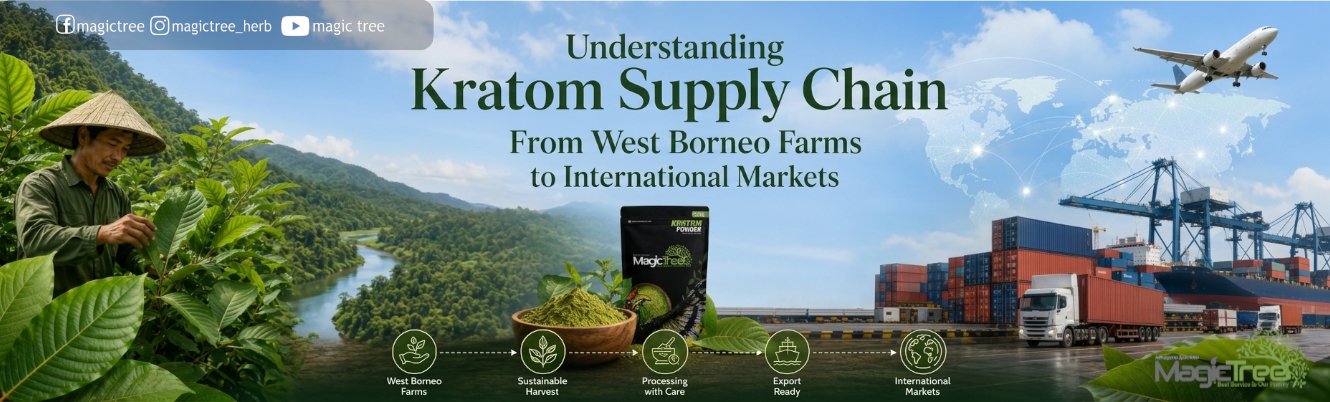
The global kratom market relies on a complex kratom supply chain that connects local farmers in Indonesia with importers, distributors, and businesses worldwide. For buyers seeking consistent quality and reliable fulfillment, understanding how kratom moves from cultivation to export can provide valuable insight into supplier capabilities and product standards.
As one of the leading kratom-producing regions, West Kalimantan plays a central role in this process. From harvesting and processing to quality control and international shipping, each stage of the supply chain contributes to the final product that reaches global markets. Understanding these steps can help businesses make more informed sourcing decisions and build stronger supplier relationships.
Why Understanding the Kratom Supply Chain Matters
For kratom importers and distributors, understanding the supply chain is about more than knowing where a product comes from. A well-managed supply chain directly affects product consistency, quality standards, delivery timelines, and long-term business reliability. When every stage from harvesting to export preparation is handled properly, buyers can reduce sourcing risks and maintain a stable supply for their customers.
Working with an experienced supplier also provides greater transparency throughout the process. By understanding how kratom is sourced, processed, and prepared for international markets, businesses can make more informed purchasing decisions and establish stronger partnerships with suppliers that prioritize quality and operational efficiency.
Harvesting Kratom Leaves in West Kalimantan
West Kalimantan is widely recognized as one of the primary regions for kratom cultivation in Indonesia. The area’s tropical climate, fertile soil, and abundant rainfall create favorable growing conditions for kratom trees. As a result, the region has become an important source of kratom supplied to domestic and international markets.
The supply chain begins with the careful harvesting of mature kratom leaves by local farmers. Proper harvesting practices help preserve leaf quality and support consistency throughout the production process. Once collected, the leaves are transported for further processing, where they undergo drying, grinding, and quality control procedures before being prepared for export.
Processing and Quality Control
After harvesting, kratom leaves move through several processing stages designed to maintain product quality and consistency. The leaves are carefully dried to reduce moisture content before being ground into powder and prepared for further evaluation. Proper processing helps preserve the characteristics of the raw material while supporting product uniformity across different batches.
Quality control is an equally important part of the supply chain. Reputable suppliers implement inspection procedures throughout processing to identify potential issues and maintain production standards. By combining consistent processing methods with effective quality control measures, suppliers can better meet the expectations of importers, distributors, and businesses operating in international markets.
Packaging and Export Preparation
Once processing and quality control are completed, kratom products are prepared for packaging and export. Proper packaging plays an important role in protecting product quality during storage and transportation, helping ensure that products arrive in suitable condition for distributors and end buyers.
Export preparation also involves organizing the necessary documentation and logistics required for international shipments. Experienced suppliers understand the importance of efficient coordination throughout this stage, as accurate documentation and timely shipment handling contribute to a smoother supply chain and more reliable delivery process for global customers.
International Shipping and Distribution
The final stage of the kratom supply chain involves international shipping and distribution. Once products are ready for export, shipments are transported to buyers in various global markets, where importers and distributors play a key role in delivering products to businesses and consumers within their respective regions.
A reliable shipping and distribution process helps minimize delays, maintain supply continuity, and support long-term business growth. For importers, working with an experienced supplier that understands international logistics can contribute to a more efficient supply chain and stronger operational stability over time.
Conclusion
Understanding the kratom supply chain provides valuable insight into the processes that influence product quality, consistency, and reliability. From harvesting in West Kalimantan to processing, export preparation, and international distribution, each stage plays an important role in ensuring products reach global markets efficiently. For importers and distributors, working with a supplier that prioritizes transparency and operational standards can help support long-term business success and a more dependable supply chain.
1 Trackback
Beyond Price: Why Smart Kratom Importers Invest in Long-Term Supplier Relationships - Magic Tree Kratom
June 22, 2026 at 7:59 am[…] stable and reliable supply chain is essential for businesses that depend on consistent inventory levels and predictable delivery […]