
A reliable kratom supplier can provide more value than a competitive price when you’re sourcing products for an international business. Consistent quality, clear communication, dependable order fulfillment, and accurate documentation can all influence how smoothly your business operates after the initial purchase.
For importers, wholesalers, and distributors, supplier reliability becomes increasingly important as order volumes and purchasing frequency grow. A supplier that can consistently meet agreed expectations is better positioned to support repeat orders and long-term business needs.
This guide explores the key characteristics that can distinguish a reliable bulk kratom supplier from one that simply offers an attractive price, helping buyers make more informed sourcing decisions.
Consistent Product and Quality Standards
A reliable supplier should be able to maintain consistent product standards across repeat orders. For buyers, consistency matters because significant differences between batches can make inventory planning and product management more difficult.
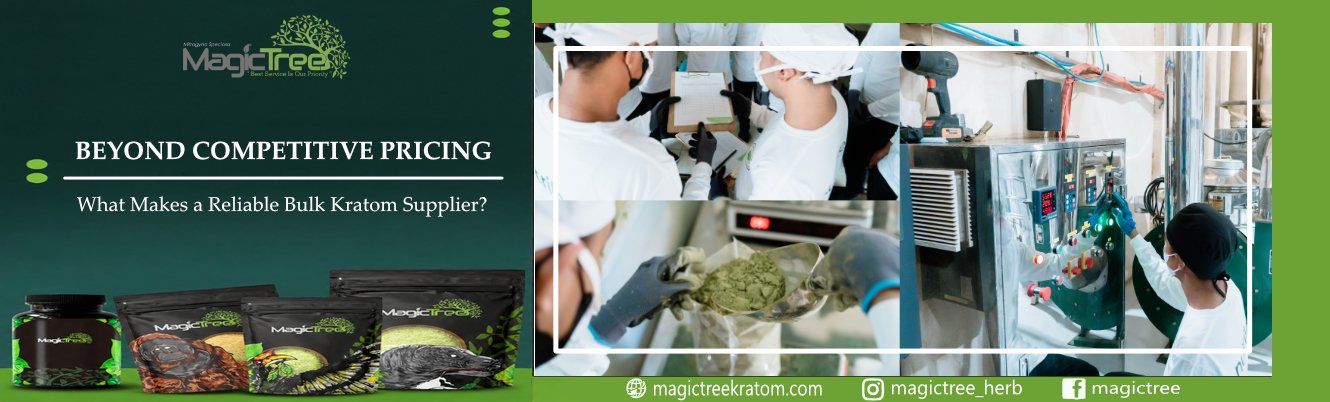
Rather than evaluating quality based on a single shipment, buyers should ask how the supplier manages quality throughout its production process. This may include how raw materials are handled, how products are processed and stored, and how quality is checked before orders are prepared for shipment.
Clear quality procedures can also make it easier to establish expectations between the buyer and supplier. When quality requirements are discussed and documented in advance, both parties have a clearer basis for evaluating whether future orders meet the agreed specifications.
Consistency is particularly important for businesses that expect to place recurring orders. A supplier that can maintain established standards over time is better positioned to support a stable purchasing relationship.
How Quality Control Supports Supplier Reliability
Quality control is one of the clearest ways a supplier can demonstrate that product consistency is managed systematically rather than left to chance. For bulk buyers, this matters because quality expectations need to remain consistent across repeated shipments.
A supplier’s quality control process may include checks at different stages of production, from raw material inspection and processing to storage and finished-product testing. The specific tests and acceptance criteria can vary depending on the product, destination market, and applicable requirements.
Laboratory testing can provide additional information about a batch and help verify whether it meets defined specifications. For example, Utah’s current kratom guidance identifies testing for areas including alkaloids, foreign matter, microbial contaminants, pesticides, heavy metals, and, for certain product types, residual solvents. These requirements are specific to Utah and should not be treated as universal requirements for every kratom shipment.
For buyers, the important question is not simply whether a supplier says its products are “tested.” A more useful approach is to understand what is tested, how often testing is performed, which laboratory performs the analysis, and how test results are connected to individual batches or lots.
Transparent Communication and Documentation
A reliable supplier should be able to communicate clearly about product specifications, order requirements, and supporting documentation. For international buyers, having accurate information available before an order is shipped can help reduce misunderstandings and make the purchasing process more predictable.
Communication is particularly important when buyers have specific requirements for packaging, product specifications, testing, or shipping documentation. A supplier that is willing to clarify these requirements and provide relevant information gives buyers a clearer basis for evaluating whether the order meets their expectations.
Documentation can also help create consistency between what is discussed and what is ultimately supplied. Product specifications, test reports, invoices, packing information, and other relevant records should be handled carefully and kept consistent with the actual shipment.
For quality-related documentation, buyers should look beyond a simple statement that a product has been tested. Asking for information that connects test results to a specific batch or lot can provide more useful evidence of the supplier’s quality control practices. The value of laboratory testing depends on what is tested, how the testing is conducted, and how the results are documented.
Reliable Production and Order Fulfillment
A supplier’s reliability is also reflected in its ability to fulfill orders consistently. Even when product quality and communication are satisfactory, difficulties with production capacity, order preparation, or delivery coordination can create problems for buyers.
Before placing a larger order, buyers should discuss expected order volumes, production timelines, packaging requirements, and any factors that could affect fulfillment. This helps both parties establish realistic expectations before an order enters production.
For recurring purchases, it is also useful to understand whether the supplier can support changes in order volume as business requirements develop. A supplier does not necessarily need to have unlimited capacity, but it should be able to communicate its capabilities and limitations clearly.
Order fulfillment should also be considered together with delivery commitments. The International Trade Administration notes that failure to ship as promised can negatively affect how foreign buyers view a supplier’s dependability.
What to Look for in a Long-Term Supplier
A supplier may appear reliable during an initial transaction, but long-term reliability is better demonstrated through consistent performance over time. Buyers should therefore look beyond a supplier’s first quotation or shipment and consider whether the company can continue meeting agreed expectations as the business relationship develops.
When considering a long-term supplier, pay attention to several practical factors:
- Consistent product standards: Can the supplier maintain agreed specifications across repeat orders?
- Clear communication: Does the supplier provide timely and accurate information when requirements or circumstances change?
- Reliable fulfillment: Can the supplier consistently handle agreed order volumes and communicate realistic production timelines?
- Supporting documentation: Are relevant product, quality, and shipping documents provided clearly and consistently?
- Ability to support growth: Can the supplier accommodate changes in order volume or purchasing frequency as your business develops?
These factors do not guarantee that every future order will be problem-free, but they provide a more useful basis for assessing whether a supplier is suitable for an ongoing business relationship. The International Trade Administration similarly recommends investigating potential business partners carefully and considering whether their capabilities can meet a company’s specific requirements.
Conclusion
Choosing a reliable kratom supplier requires looking beyond the lowest available price. Product consistency, clear communication, dependable order fulfillment, accurate documentation, and the ability to support recurring orders can all influence whether a supplier is suitable for a long-term business relationship.
For bulk buyers, the goal is not simply to find a supplier that can complete one successful order. A stronger sourcing relationship is built when both parties can establish clear expectations and maintain consistent performance as purchasing needs develop.
Every business has different requirements, so the right supplier will depend on factors such as order volume, product specifications, quality expectations, and shipping requirements. Taking the time to understand these factors before committing to a long-term relationship can help buyers make more informed sourcing decisions.
If you’re looking for a reliable bulk kratom supplier, Magic Tree Kratom is committed to consistent product standards, clear communication, and professional support for international buyers. Contact our team to discuss your sourcing requirements and learn how we can support your business.