
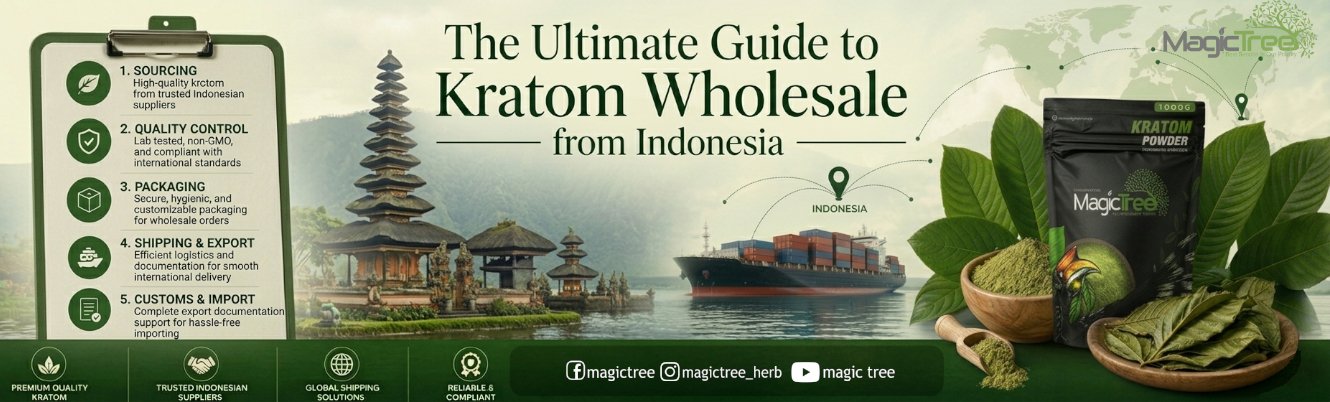
The global demand for natural botanicals has skyrocketed over the last decade, and at the heart of this movement is a leaf that has been used for centuries in Southeast Asia. If you are looking to enter the market or scale your existing business, sourcing directly from the source is the only way to go.
Indonesia is responsible for over 90% of the world’s kratom supply. However, navigating the waters of international trade, Indonesian regulations, and quality standards can feel like trekking through a dense Kalimantan jungle without a map. This guide is designed to be your compass, helping you establish a reliable supply chain while ensuring your business stays compliant and profitable.
Why Source Directly from Indonesia?
Before we dive into the “how,” let’s talk about the “why.” Why skip the domestic middleman in the US or Europe and go straight to the source?
- Cost-Efficiency: Buying wholesale from Indonesia cuts out several layers of markups. When you buy by the ton (or even half-ton), the price per kilogram drops significantly.
- Freshness: Kratom is a natural product. The shorter the time between the harvest in the tropical forests and its arrival at your warehouse, the better the alkaloid profile remains preserved.
- Customization: Working directly with an Indonesian supplier allows you to request specific grinds (from coarse to nano-powder) and customized packaging or labeling.
Read also: Borneo vs. Indo Strains: How Geographical Origin Impacts Alkaloid Profiles
Understanding the Legal Landscape
The most critical step in importing kratom is ensuring you are playing by the rules. While kratom is legal to export from Indonesia, the legal status in the destination country is what usually causes headaches.
For US-Based Importers
The FDA monitors kratom closely. To ensure your shipment doesn’t get seized at the Port of Entry, your supplier must follow strict labeling guidelines. Avoid making any medical claims on the packaging. Terms like “not for human consumption” are often used to comply with specific regulatory frameworks, though the industry is shifting toward more transparent “Raw Forest Botanical” labeling.
Indonesian Export Regulations
The Indonesian government periodically updates its export policies. It is vital to work with a supplier who possesses a valid NIB (Nomor Induk Berusaha) and the necessary export permits. Always ask your supplier if they are up to date with the latest Ministry of Trade regulations to avoid your cargo getting stuck at ports like Dwikora in Pontianak.
Identifying a High-Quality Wholesale Supplier
Not all kratom is created equal. The market is flooded with vendors, but a true wholesale partner should offer more than just a low price. Here is what to look for:
1. Sourcing and Harvesting Practices
The best kratom comes from mature trees found in the humid regions of West Kalimantan. Ask your supplier if they source from wild-grown trees or plantations. Wild-grown “Jungle Kratom” is often preferred by enthusiasts for its robust alkaloid content.
2. Processing Standards
How is the leaf dried? Indoor drying is generally superior to outdoor drying as it prevents UV rays from breaking down the alkaloids and keeps the product away from dust and contaminants. Furthermore, the “Nano” grind has become the industry standard—it’s a micro-powder that dissolves more easily and offers a smoother texture.
3. Lab Testing (The Non-Negotiable)
Never, ever import kratom that hasn’t been lab-tested. A reputable Indonesian supplier will provide COAs (Certificates of Analysis) for:
- Alkaloid Content: Mitragynine and 7-hydroxymitragynine levels.
- Microbiological Contaminants: Checking for Salmonella, E. coli, mold, and yeast.
- Heavy Metals: Ensuring the soil where the trees grew wasn’t contaminated with lead, arsenic, or mercury.
Logistics: From Kalimantan to Your Door
Shipping 20kg is easy; shipping 27 tons (a 40ft container) is a different beast entirely. You have two main options:
Air Freight
- Pros: Fast (5-10 days), lower risk of moisture damage.
- Cons: Expensive. Best for smaller wholesale orders (100kg – 500kg).
Sea Freight
- Pros: Extremely cost-effective for large-scale operations.
- Cons: Slower (30-45 days). Requires careful moisture control. Using silica gel packets and airtight inner liners is mandatory to prevent mold during the humid ocean transit.
Building a Long-Term B2B Relationship
In Indonesian business culture, relationships (silaturahmi) matter. You aren’t just buying a commodity; you are entering a partnership.
- Communication: Most Indonesian suppliers prefer WhatsApp for quick updates. Don’t be afraid to ask for photos of the current harvest or the production line.
- Payment Terms: For first-time buyers, many suppliers use Bank Wire (T/T). Once trust is established, you might negotiate better terms. Always verify the bank account details match the business registration.
- Transparency: A good supplier will be honest about harvest seasons. For instance, during the heavy rainy season, drying takes longer, and they should communicate that clearly rather than rushing a subpar product.
Read also: The Global Kratom Debate: A Comparative Look at Legal Frameworks and Public Policy
Educating Your Customers
As an importer, your job doesn’t end when the container arrives. To succeed, you must provide value to your clients. Use your platform to share the “Kratom Facts”—the history of the plant, the tradition of the Indonesian farmers, and the science behind the alkaloids. Transparency builds trust, and trust builds a brand.
Conclusion : Importing kratom wholesale from Indonesia
A lucrative venture, but it requires due diligence and a commitment to quality. By focusing on lab-tested products, understanding the logistics of sea and air freight, and building strong ties with Indonesian farmers and suppliers, you can create a sustainable business that provides high-quality botanicals to those who need them.
The journey of the kratom leaf from the lush Indonesian rainforests to your warehouse is a long one—make sure every step of that journey reflects the excellence your brand stands for.
1 Trackback
Mitragynine and Beyond: A Scientific Look at Kratom Alkaloid Profile - Magic Tree Kratom
May 11, 2026 at 2:34 am[…] Read also : The Ultimate Guide to Importing Kratom Wholesale from Indonesia […]